Campus Farm Initiatives
The Campus Farm acts as a living lab, providing students, staff, faculty, and local community members with a space to learn about and practice sustainability.
The Office of Campus Infrastructure and Sustainability regularly offers tours of the farm to the campus community, as well as to local elementary schools, senior groups, community organizations and international visitors. These tours highlight both the farm’s sustainability features and its history.
During the growing season, the Campus Farm hosts planting days where community members help plant trees, vegetables, and native plants while learning about the benefits of native species and best practices for growing produce.
Another frequent event is invasive species removal, where volunteers help eliminate dog-strangling vine, burdock, buckthorn, and phragmites, which outcompete native species. Volunteers also learn how invasive species negatively impact biodiversity by harming seed-dispersing birds and disrupting pollination networks and food sources.
The Honeycomb Archway
The Honeycomb Archway is an architectural placemaking project that expands on the university’s Pollinator Project.
The Honeycomb Archway was developed through a collaboration between Ontario Tech University, Brilliant Catalyst’s Experiential Venture Program, and Durham College's Architectural Technology students. The project provides an educational, innovative, and hands-on learning opportunity that equips future leaders to solve complex problems.
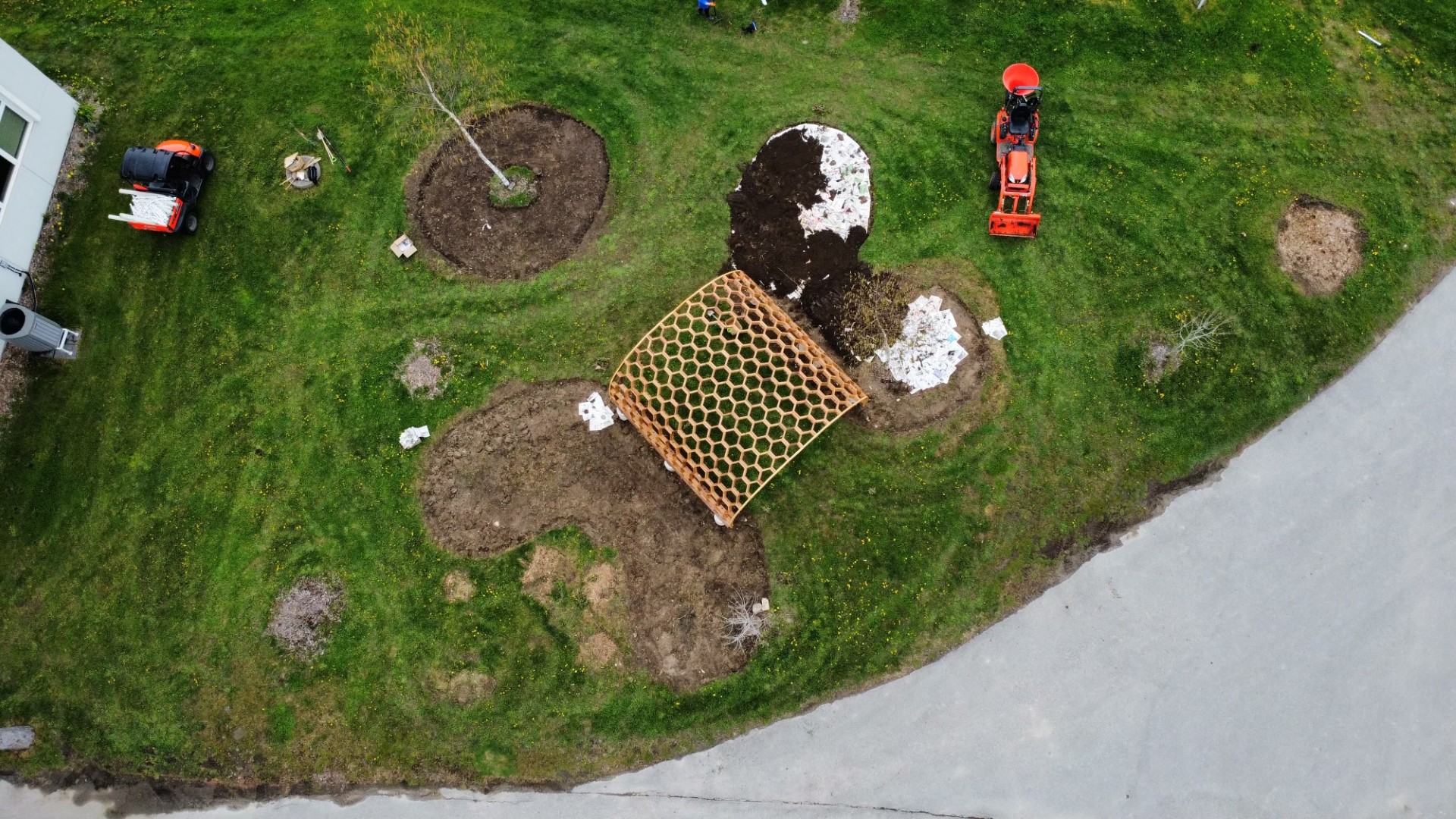
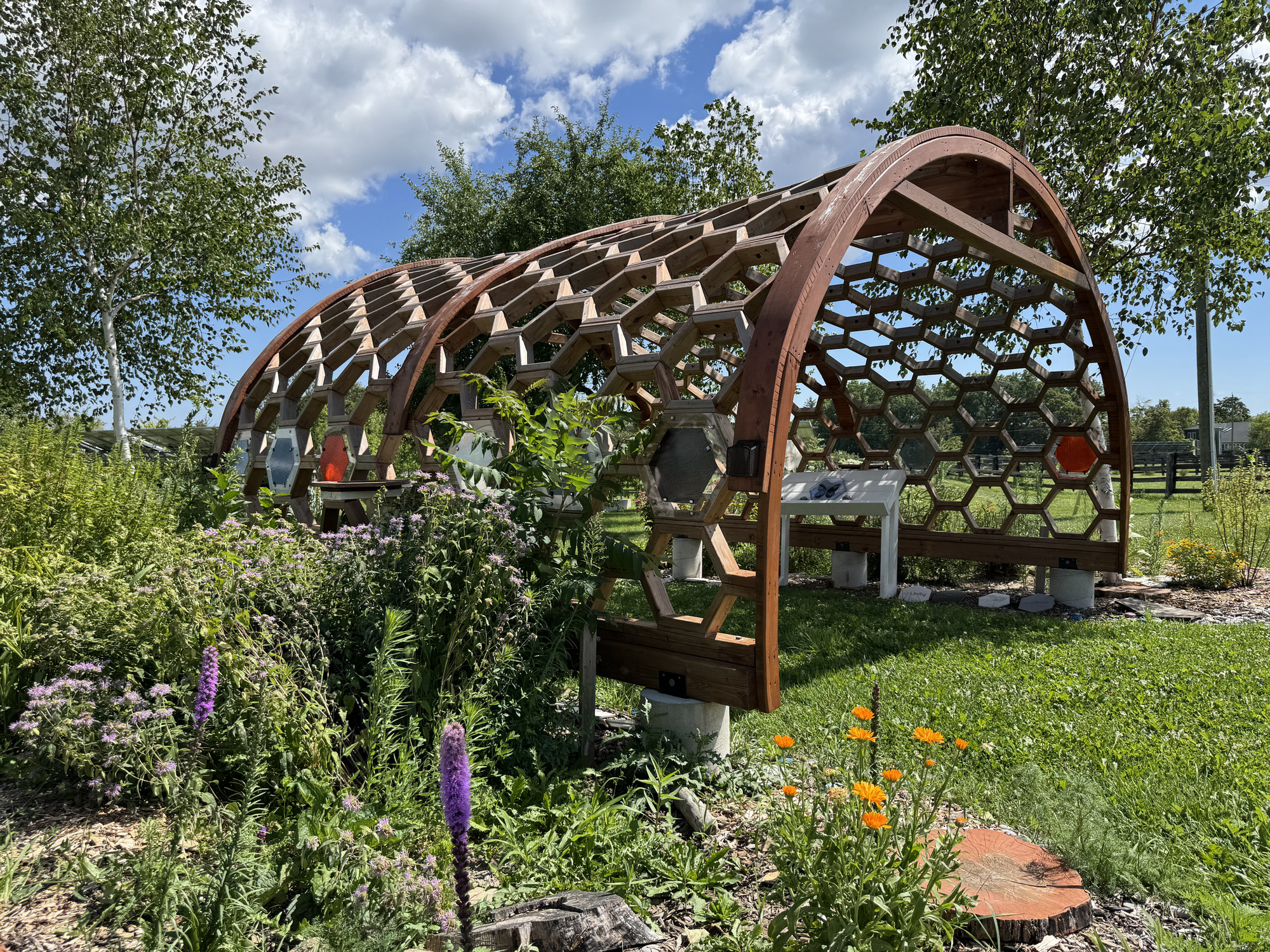
The Honeycomb Archway features pollinator-friendly flowers and native plants arranged to form the shape of a butterfly when viewed from above. Inspired by the university’s commitment to environmental stewardship, the archway symbolizes the connection between academia and nature while serving as a welcoming space.
It is intended as a living tribute to pollinators, promoting collaboration, ecological stewardship, and the coexistence of innovation and nature at the heart of Ontario Tech University.
Rainwater Barrels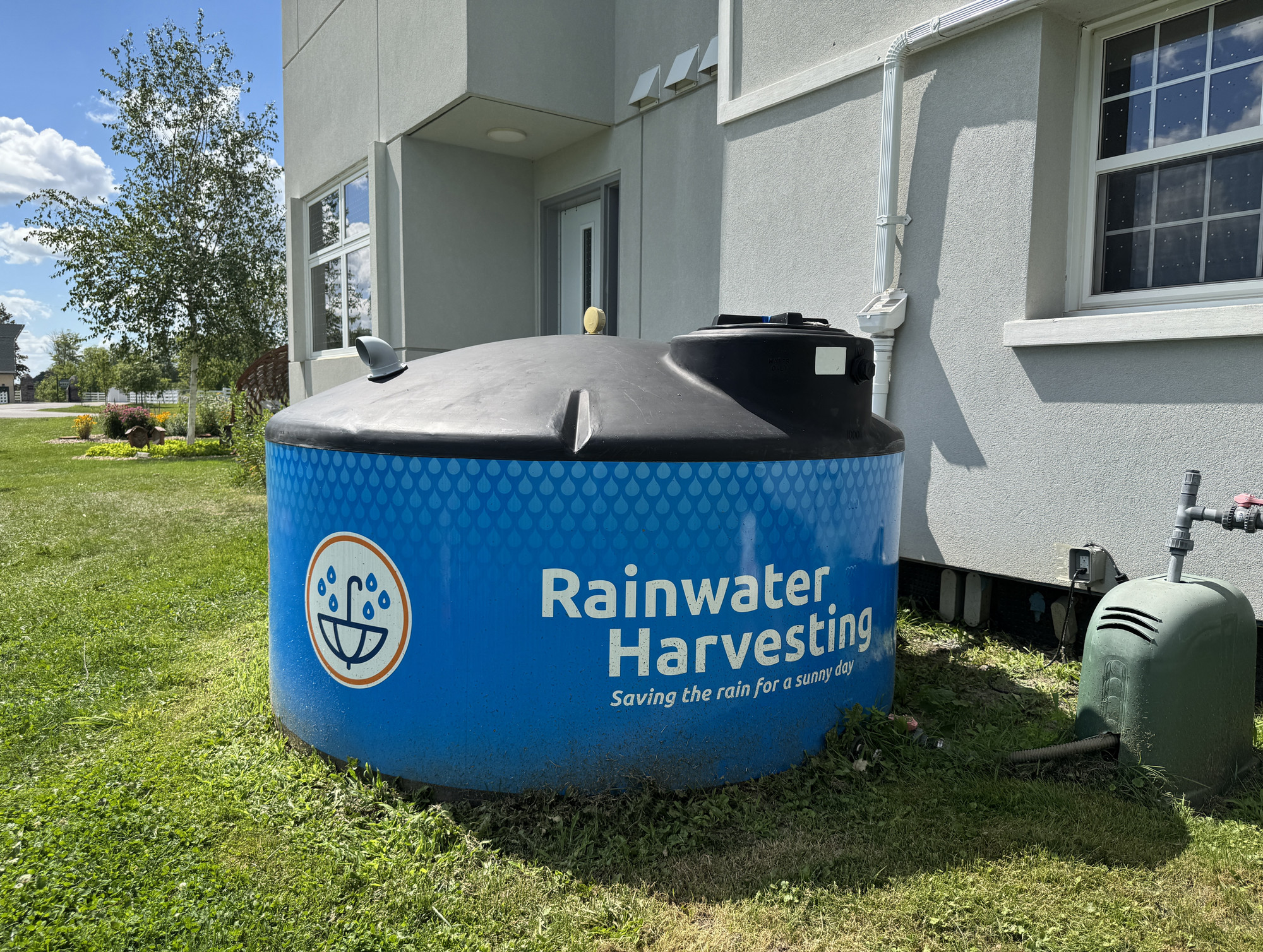
The two rainwater barrels located at the Campus Farm collect 1,100 gallons of water, which is used to irrigate the tree nursery, vegetable gardens, and wildflower gardens.
Compost Bins
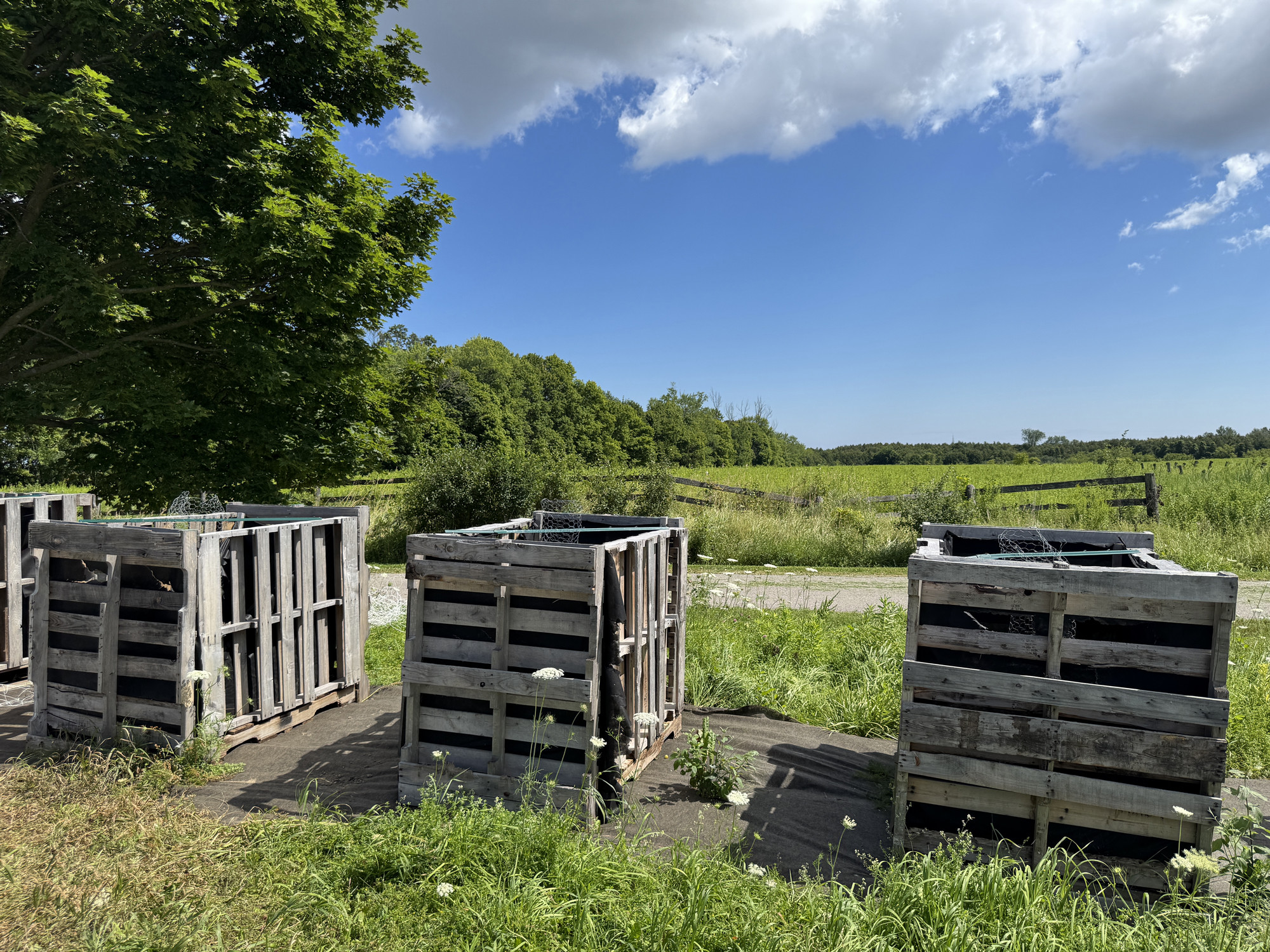
The composters at the Campus Farm are made from repurposed shipping pallets. They process organic waste from the Office of Campus Infrastructure and Sustainability, located at the farm, as well as from Charles Hall at the Downtown Campus. The resulting compost is used to enrich the soil in the tree nursery, vegetable gardens, and wildflower gardens.
Solar Panels
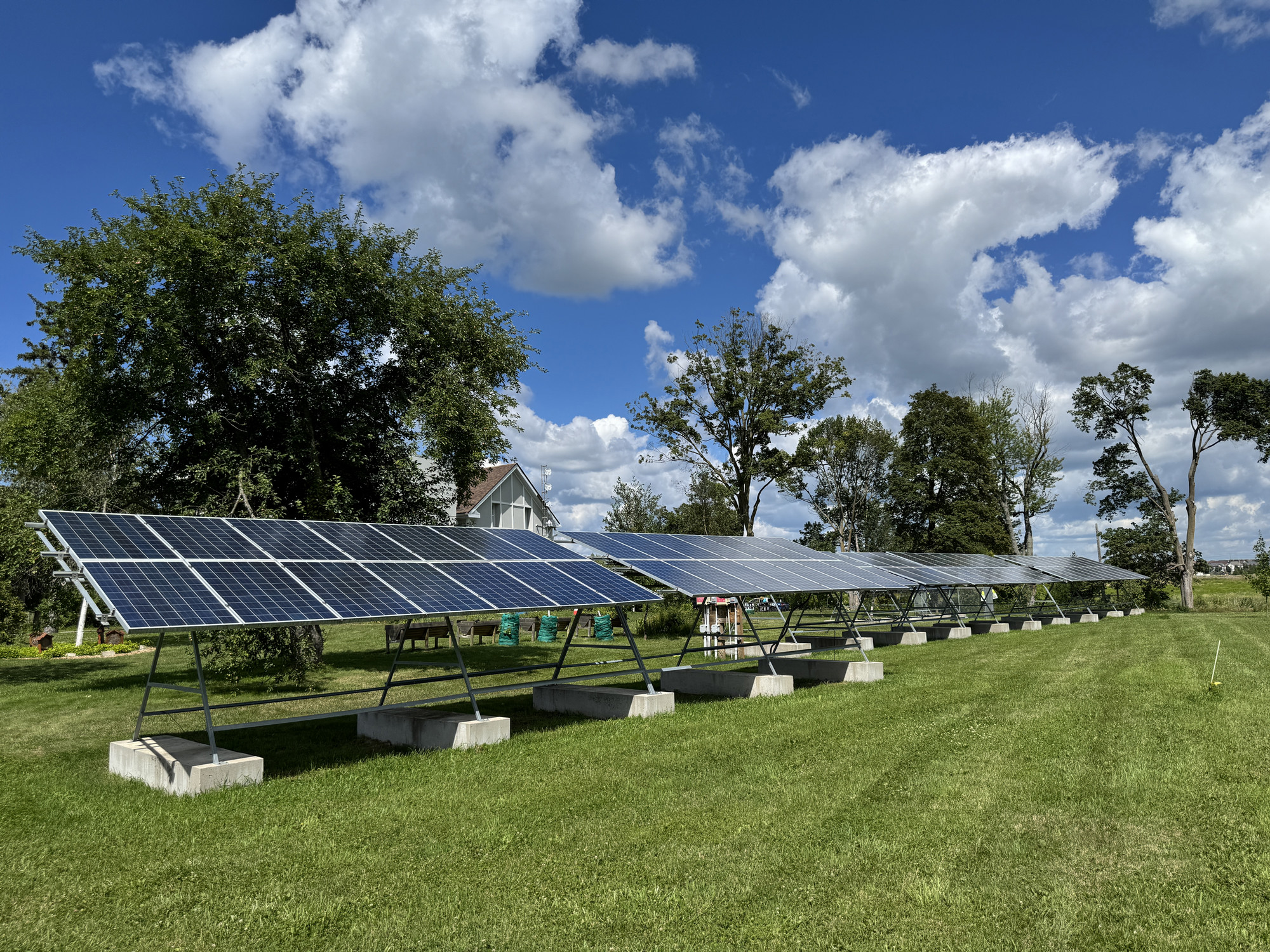
The Campus Farm is powered by solar thermal and photovoltaic panels. The photovoltaic arrays generate 85 kilowatt-hours of electricity, powering all operations at the farm and making it a net-zero facility.
Electric Vehicles
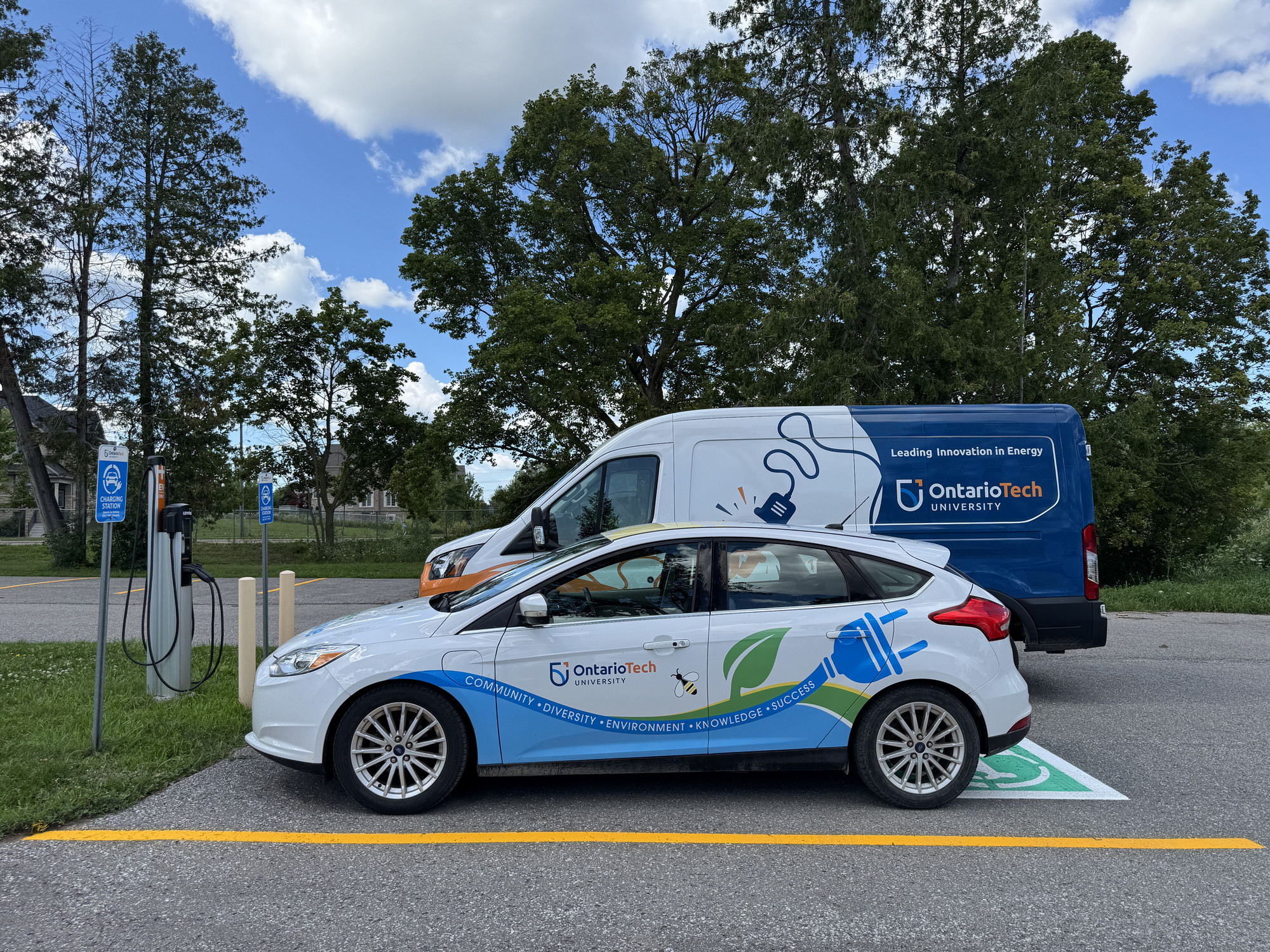
The Campus Farm features a fleet of fully electric vehicles, including two cars and a van, along with a charging station and an electric lawn mower. Staff from the Office of Campus Infrastructure use these vehicles to travel around the property and between campuses.